




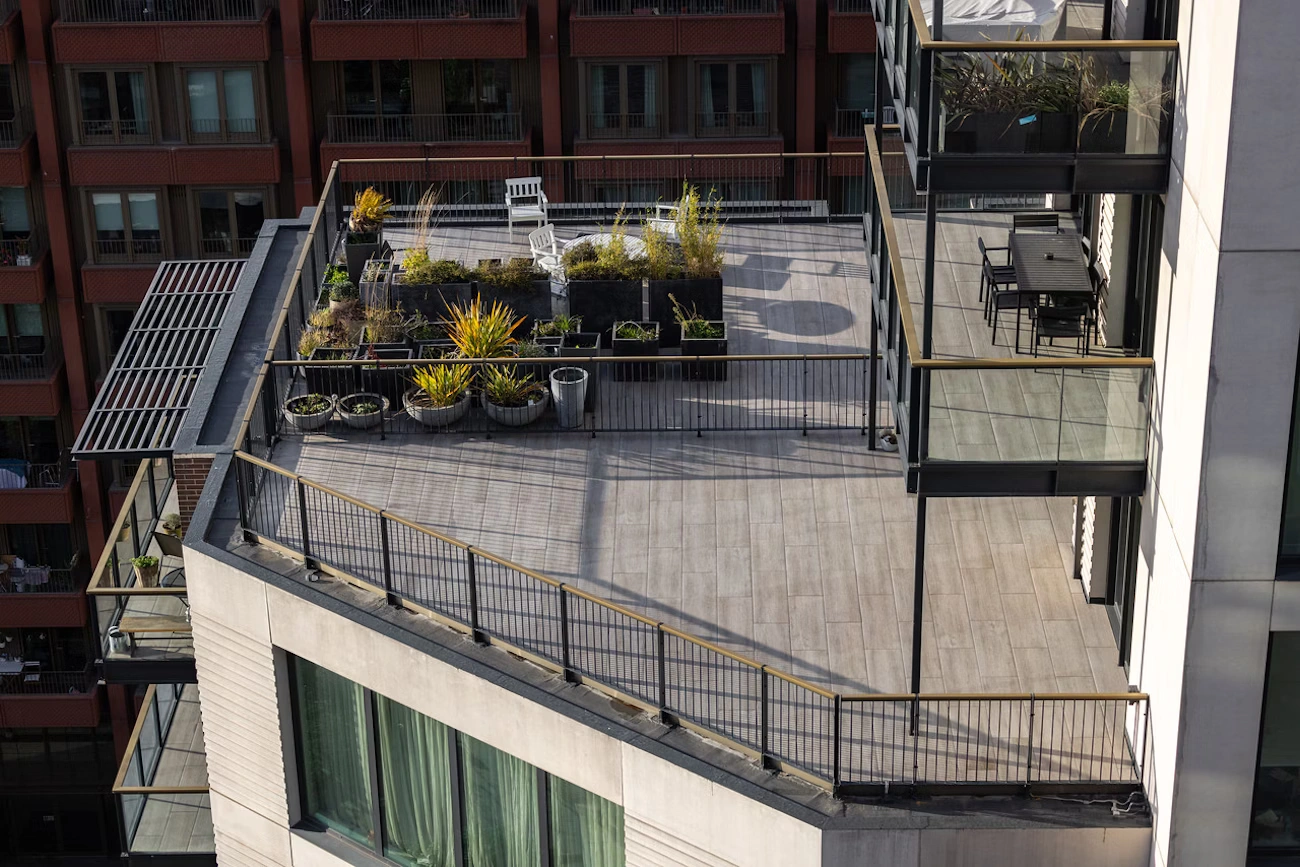
As extreme weather events become more frequent and unpredictable, commercial terraces face new and growing risks. From high winds and heavy rainfall to intense heat and freeze-thaw cycles, outdoor spaces are being tested like never before. For architects, developers, and property owners, this means terraces must do more than simply look good, they need to perform under pressure.
Designing for climate resilience is no longer optional; it’s essential. The ability of a terrace to withstand extreme conditions directly impacts safety, maintenance costs, and long-term return on investment.
In this blog, we will explore how climate-resilient design principles and advanced terrace systems can help you future-proof your commercial projects. You will discover the key strategies behind resilient terrace design, including drainage, wind uplift prevention, material durability, and modular flexibility. You will see how Raaft’s innovative commercial terrace systems support lasting performance, even in the harshest environments.
Commercial terraces and rooftop spaces have become sought-after amenities, transforming previously underused areas into social, leisure, and dining environments. But as the climate changes, these elevated outdoor spaces are increasingly exposed to the elements, and the challenges they face are intensifying.
Terraces must now contend with heavier rainfall and flooding, which can quickly overwhelm inadequate drainage systems. High winds and uplift forces threaten the stability of decking and paving, while prolonged UV exposure and extreme heat accelerate material degradation and reduce lifespan. In colder climates, freeze-thaw cycles put additional stress on surfaces and substructures, leading to cracking, loosening, and costly repairs.
Unlike ground-level landscapes, rooftop terraces are fully exposed, with little natural protection from wind, water, and temperature fluctuations. This makes them particularly vulnerable to the growing impacts of extreme weather.
For property owners and developers, the implications are significant. Poorly designed or inadequately protected terraces can lead to:
Get in touch with us today!