




In an era defined by a heightened awareness of societal and environmental concerns, businesses are taking on a more significant role in shaping the world around them for the better. As a result of this, Corporate Social Responsibility (CSR) has emerged as a concept that goes beyond conventional profit-focused motives, and instead prioritises the ethical and strategic responsibilities organisations hold in relation to society and then environment.
There are plenty of ways organisations can implement CSR initiatives such as engaging with local communities to address their needs, fostering diversity and inclusion in the workplace, and contributing to charitable causes through philanthropy and donations. However, in this blog, we are going to look at the impact of roof terraces for bolstering corporate social responsibility efforts and contributing to a healthier society and environment.
In rapidly growing urban areas, the depletion of natural spaces has become a significant concern. As cities expand to accommodate increasing populations and infrastructural needs, green areas such as parks, gardens, and open landscapes often get compromised. This reduction in natural areas not only affects the environment but also impacts the overall well-being of residents.
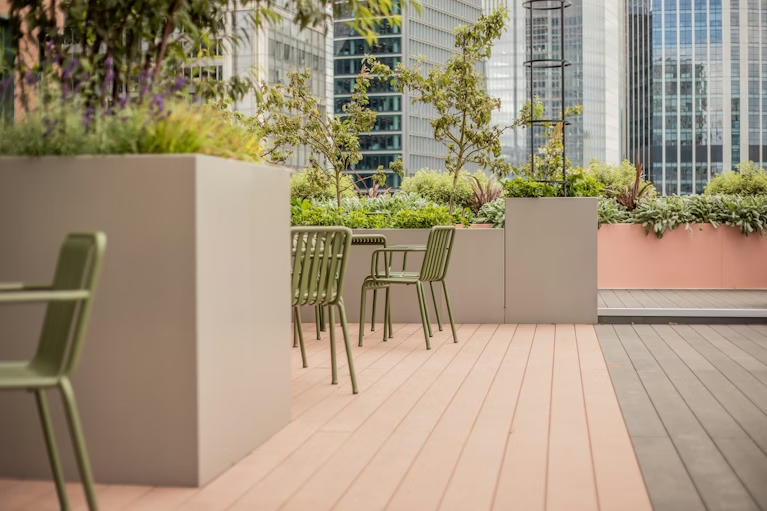
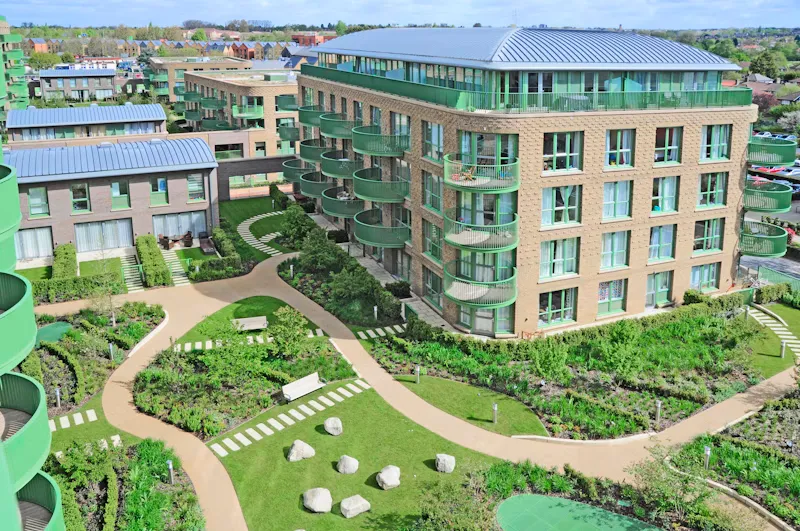
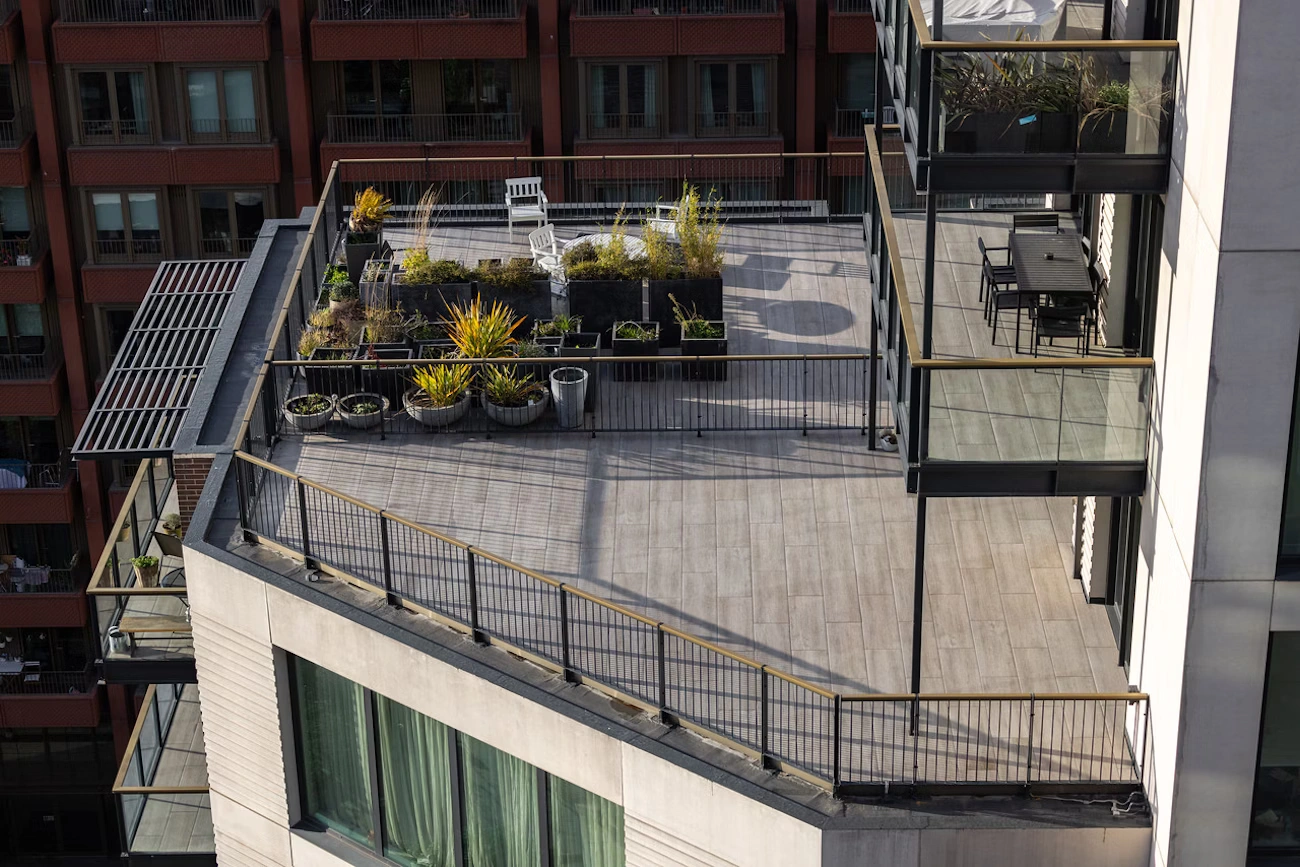
In response to this challenge, architects and urban planners are exploring innovative ways to reintroduce nature into the built environment. One solution gaining traction is the application of roof terrace systems to commercial and residential developments. These elevated spaces can range from simple rooftop gardens to more elaborate landscapes featuring bespoke planters, integrated benches and seating, and even recreational facilities. Roof terraces present a distinct chance to bring nature back into urban areas, functioning as extensions of living and working environments that embody biophilic principles and provide advantages for both the environment and society.
Roof terraces: More than just elevated outdoor spaces, they are emerging as dynamic drivers of corporate social responsibility (CSR) initiatives. These elevated havens not only offer respite from the urban hustle but also embody a commitment to environmental sustainability and community well-being. In the realm of CSR, roof terraces are not merely architectural additions; they symbolise a progressive approach to harmonising business goals with societal and ecological values.
Let’s take a deeper look into the role roof terraces play in assisting CSR efforts:
As a leading UK designer and manufacturer of roof terrace and planter systems, roof decking and tiles, Raaft can assist you at every stage of the design, specification and installation process. To discuss your ideas with Raaft, contact us on +44 (0)20 3146 7879 or at [email protected]. Alternatively, send us a message via our website enquiry form and one of our technical support team will respond promptly.
Get in touch with us today!